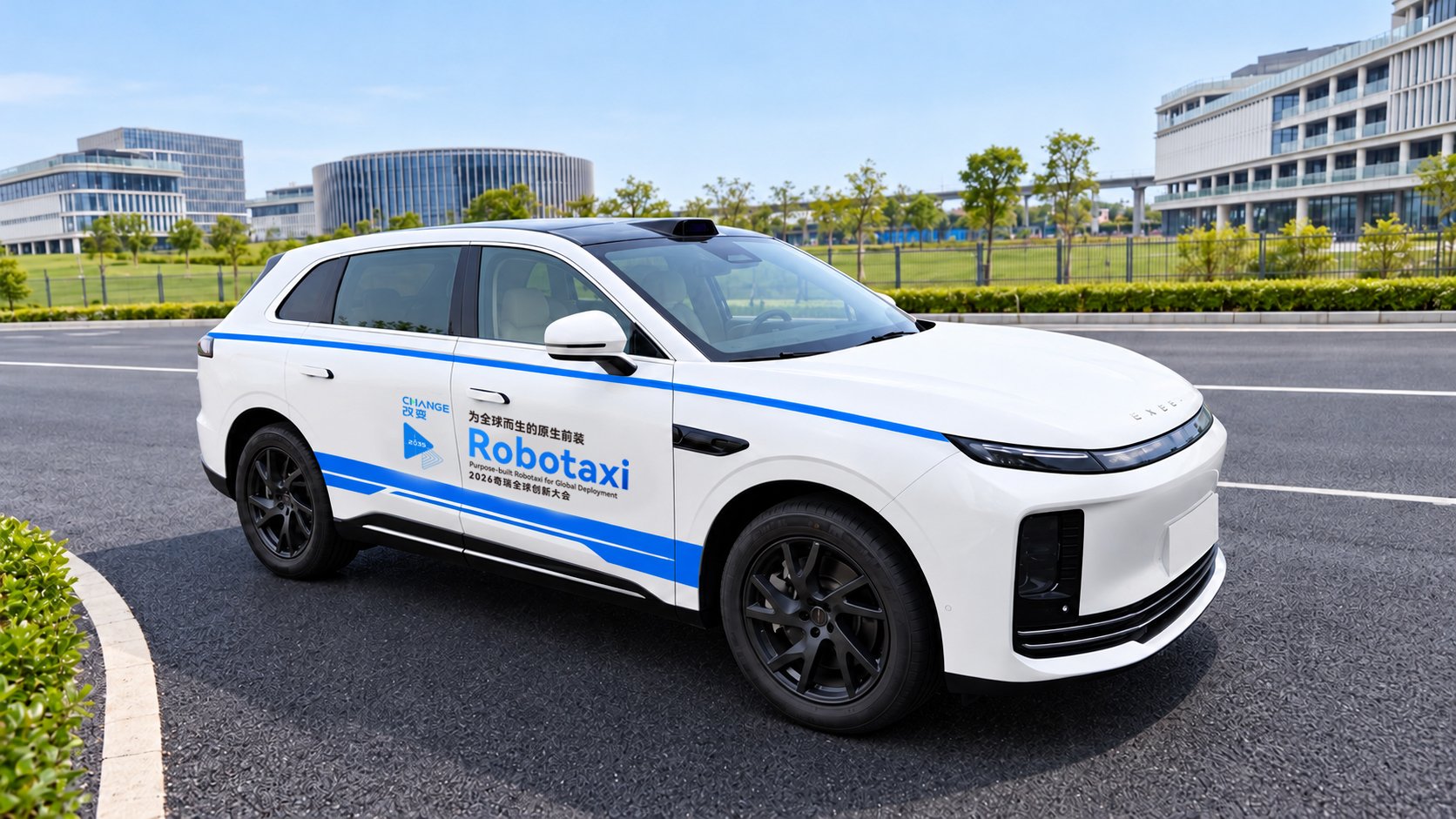
So Chery really is a "high-tech innovation company wearing the vest of an automaker." On October 20, I was invited into the Wuhu Chery Global Technology Innovation Center. The first thing I saw was not a row of display cars, but a block called "Future City." Robotaxis were in trial operation, eVTOLs were parked nearby, traffic-police robots were directing stops at intersections, V2G operating vehicles were displayed in the Xunlong energy-replenishment center, and on the other side were unmanned agricultural machinery, unmanned supermarkets, medical stations, and cultivation stations. The 2026 Chery Global Innovation Conference set its theme as "Change," and the site did not just talk about parameters; instead, it first laid out a future-life scenario for people to walk into.
Future City gives the answer first
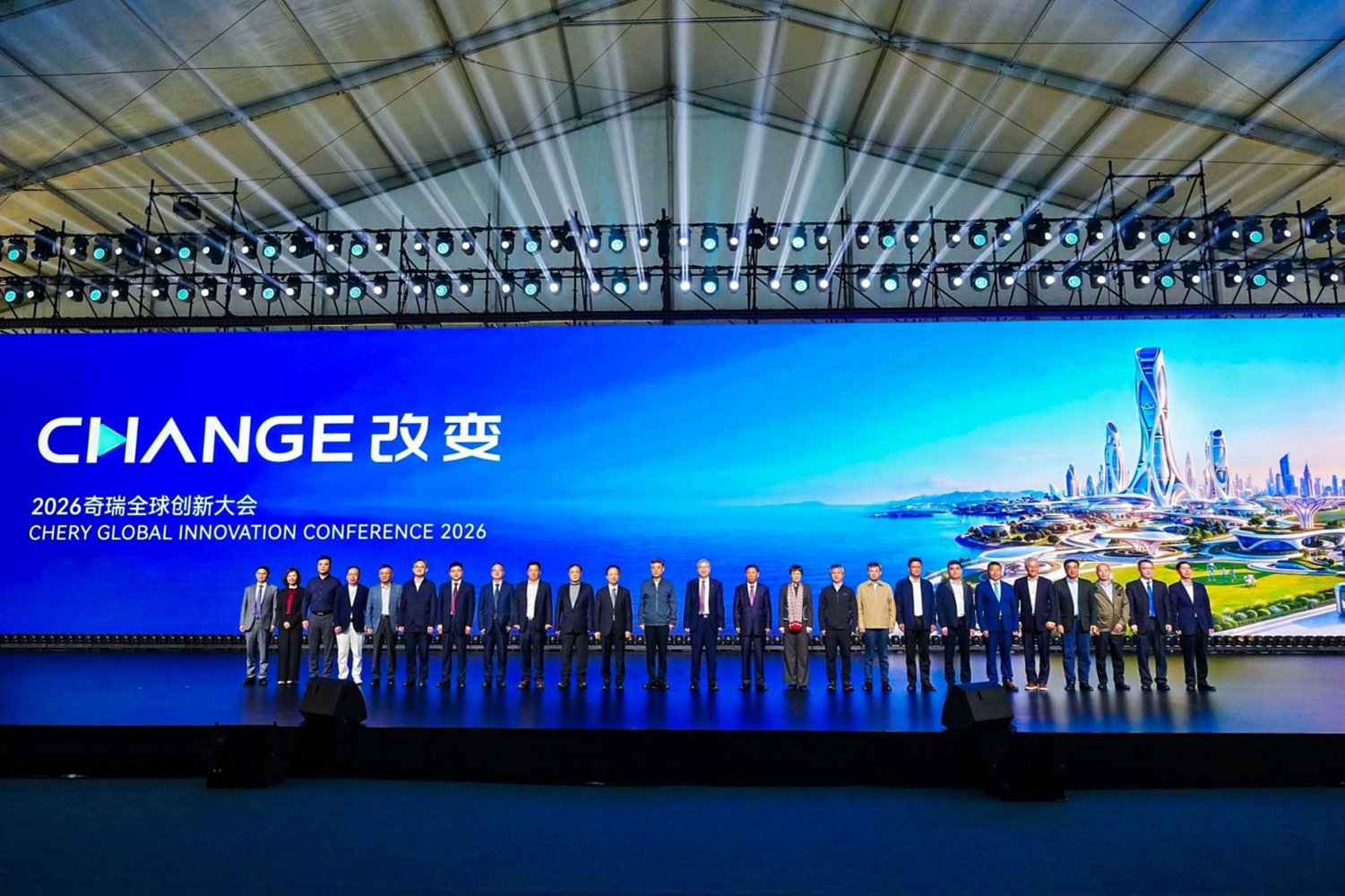
This year's conference carried a lot of information: 11 major core technologies, more than 3,000 guests from home and abroad, including over 1,300 international friends. But the main thread Chery really wanted to convey was the Yaoguang 2035 strategy—moving from a traditional automaker to an AI-driven global intelligent technology company. Chery's new label for itself is a high-tech innovation company "wearing the vest of an automaker." The high-tech industrial ecosystem cluster at the Yaoguang 2035 stage must have five characteristics: full-lifecycle electrification, highly collaborative intelligence, brand upward momentum with a global perspective, deeply integrated internationalization, and open and symbiotic ecosystemization.
The foundation supporting this shift is not empty. In the past five years, cumulative R&D investment has exceeded 110 billion, with 313 Yaoguang laboratories, markets in more than 130 countries and regions worldwide, a 1+7+N R&D center network, more than 30,000 R&D personnel, and more than 10,000 master's and doctoral talents. These numbers were placed on the strategy page and formed a contrast with the experience zones in "Future City": on one side is accumulation, on the other is implementation.
The trump card is not a car, but AI and chips
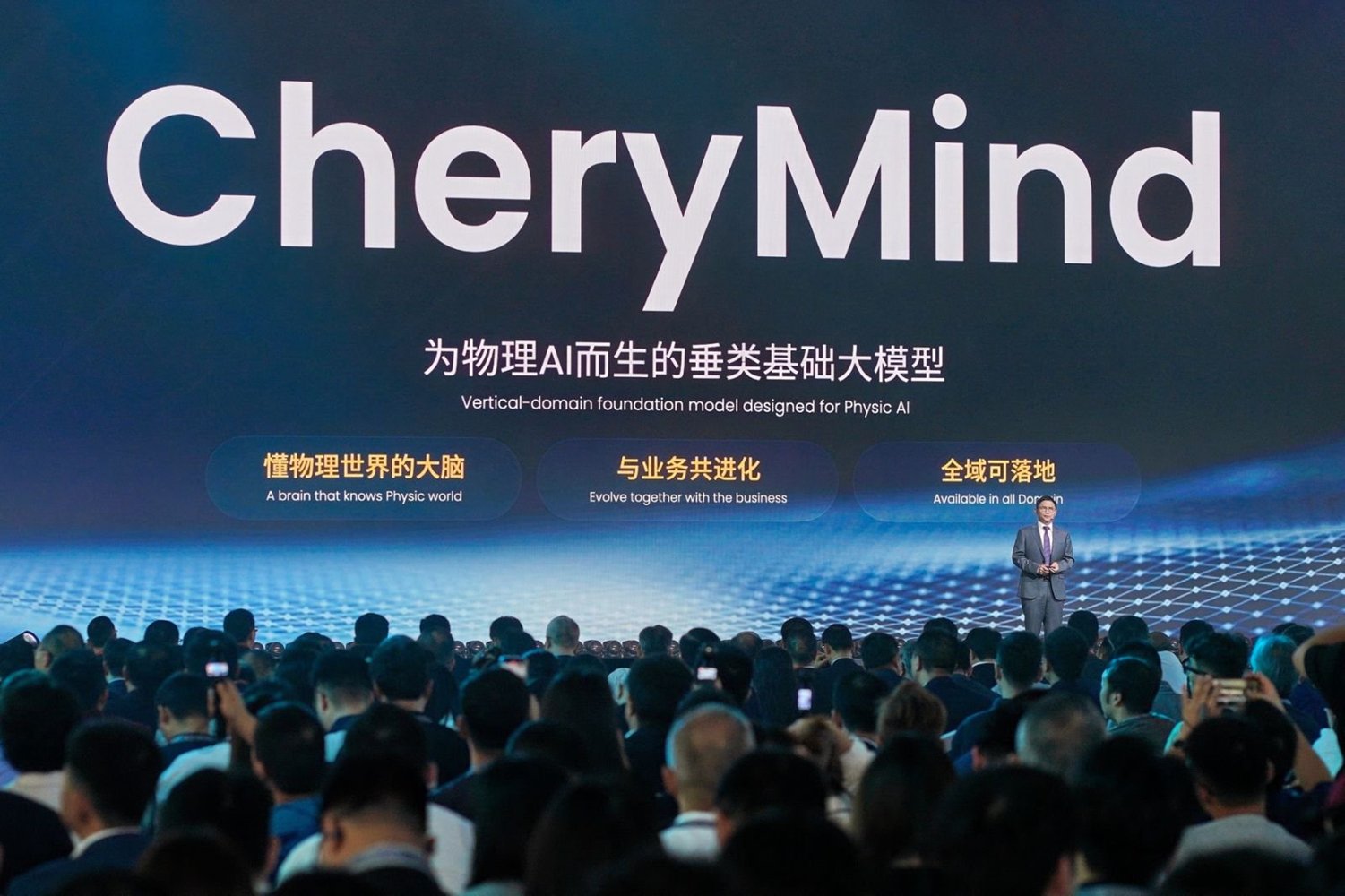
The core technical foundation of the conference is CheryMind, a vertical foundational large model born for physical AI. Behind it are 700TB of enterprise knowledge, 200PB of engineering data, tens of millions of R&D documents, 25 million clips of coach-level driving data, and 5 million clips of robot motion-capture data. CheryMind has already entered Chery's corporate operations: more than 1,500 end-to-end business processes, more than 400 enterprise systems connected, more than 60,000 daily uses by employees, and more than 200 business scenarios covered. On the enterprise side there are vertical models for CAD, quality, manufacturing, and enterprise agents; on the product side there are vertical models for smart cabins, intelligent driving, vehicle-end intelligence, flight control, MoAgent, and agricultural machinery OS. The new capabilities formed by vertical models in real scenarios will also continue to flow back into the foundational model.
Partnering with CheryMind is the Ziwei chip series. The C-series central computing chip C100 is planned for 2027, with vehicle NPU computing power (two chips) of 2400 TOPS, support for deployment of 100B large models, memory bandwidth of 600GB/s, and an 80ms E2E algorithm closed loop; the two CPUs total 1000 KDMIPS; on safety it reaches AEC-Q100, ASIL-B full chip/ASIL-D safety island Grade2. Among the S-series automotive-grade silicon carbide chips, the S1500 has a drain-source withstand voltage of 1500V, specific on-resistance Rsp of 2.0 mΩ·cm², module current capability of 1450A, maximum efficiency ≥99.6%, maximum junction temperature of 200°C, short-circuit tolerance of 2μs, and a mass-production cost reduction of ≥30% on 8-inch wafers. Software-hardware collaboration is a key step for Chery in pushing AI carmaking from "feature stacking" to "native evolution."
Four freedoms, translated into concrete numbers
In terms of freedom of mobility, Chery debuted the full-dimensional world engine CHERY AWE, using "one world model + three major sub-models" to link understanding the world, reading semantics, and producing behavior: the scenario-construction model builds more than 700,000 scenarios, more than 300,000 high-risk scenarios, and more than 20,000 extreme scenarios; the language-perception model feeds multi-camera images, instructions, navigation, and ego-vehicle motion into the large model for multimodal reasoning; the action-policy model uses scalable MoT multi-expert architecture to strengthen the shift from passively responding to danger to actively predicting risk. Robotaxi presents the "industry's first natively designed front-installed solution born for the world," with five major native features and six layers of safety, targeting 100,000 vehicles in global operation by 2030. Lingxiao eVTOL brings two products: the Q212 two-seat compound-wing manned eVTOL, 120km/h, all-electric, with more than 60 minutes of range at full load; and the J506 five-seat full-tilt six-rotor manned eVTOL, with a maximum speed of 350km/h, a range of more than 1,000km, and autonomous flight.
More direct. V2G is positioned as the industry's first AC V2G large-scale station, with batteries supporting 0.1C charging and discharging, estimated annual peak-shaving and valley-filling revenue of more than 3,000 yuan, and plans to build 20,000 "vehicle-grid interaction plan" V2G stations globally by 2029, with the first batch of cities being Shanghai, Hefei, Guangzhou, and Wuhu. Xunlong instant charging offers 1500A ultra-fast charging, system power of 1.44MW, 500 kilometers of range in 5 minutes of charging, a charging cable of ≤2kg, and noise of ≤50dBA. Wireless charging power is 11kW, supports up to 22kW, and transmission efficiency is ≥92%. Solid-state battery cells are 400Wh/kg, with a wide temperature range of -40°C to 100°C, and can still work normally after a 200°C high-temperature oven test; the pilot line will be put into use in 2027. Solar cars add air water harvesting: the flexible photovoltaic car cover generates up to 6 kWh per day at peak, the atmospheric water harvesting system stably produces 5 liters of direct drinking water per day, and annual carbon reduction exceeds 200kg. The native 48V low-voltage electrical system has peak power of 15kW, steering response 11ms faster and braking response 20ms faster, reduces vehicle copper usage by 6kg and system weight by 8–12kg, improves low-voltage grid efficiency by 15%, reduces the number of intelligent controllers to 16, and reaches functional safety up to ASIL D. The intelligent driving unit integrates EMB, in-wheel motors, four-wheel independent kingpin steering, and active suspension into the wheel end, with a maximum wheel-end steering angle of 90°, center deviation of ≤0.1m, lateral movement deviation of ≤0.2m over 5m, moose test entry speed of ≥100km/h, steady-state cornering roll gradient of ≤3.0°/g, combined braking of ≥1.2g and motor braking of ≥0.6g, steering angle accuracy of ≤0.02°, and active suspension bandwidth of ≥100Hz. The Lingxi 8D intelligent sensory cabin uses AIOS to connect the five major domains of chassis, cabin, body, intelligent driving, and power, and the display area features a 43.7-inch integrated PHUD, 33 speakers, a 7.5.8.8.4 sound field layout, and S2S end-to-end voice.
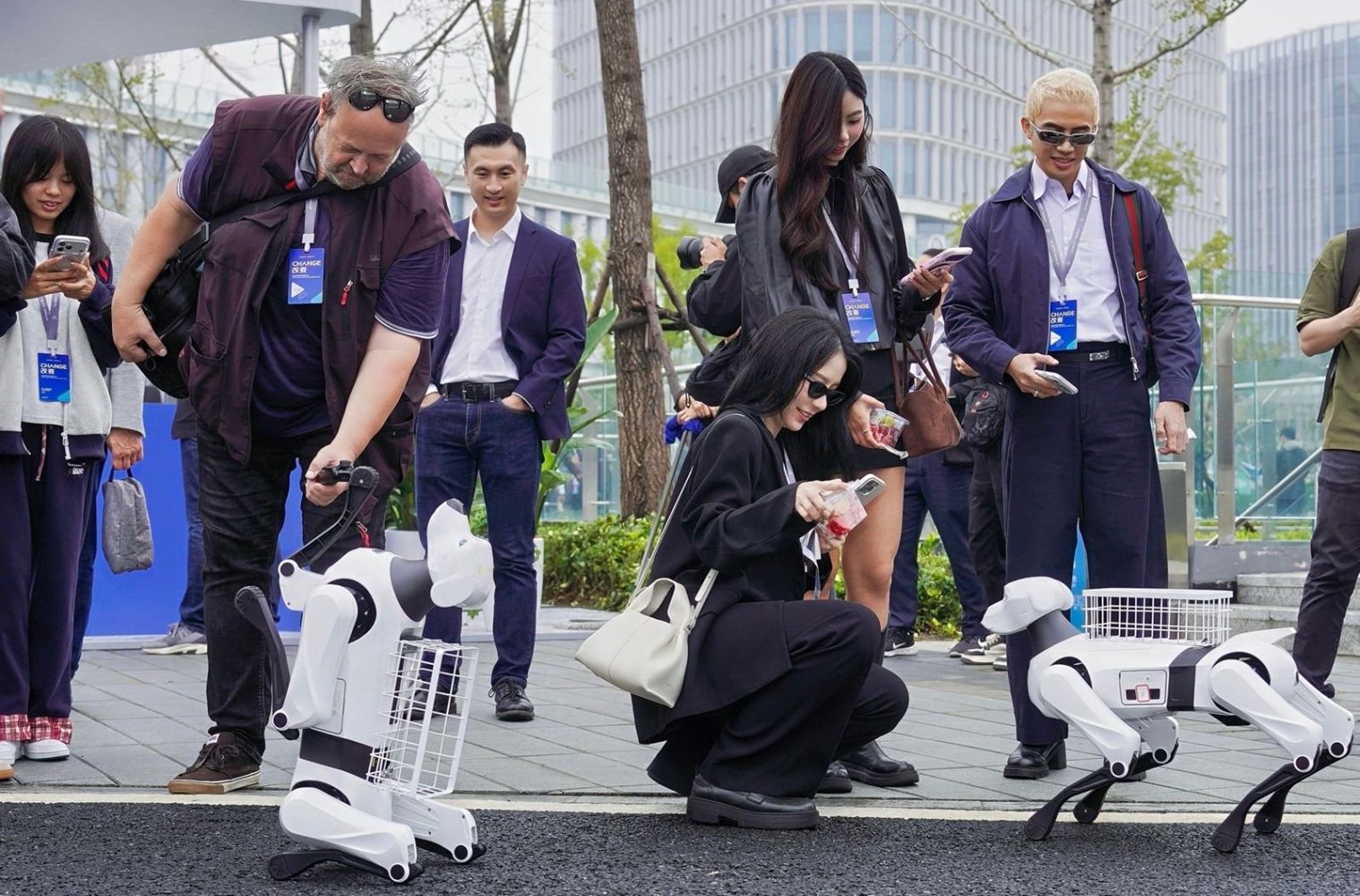
Freedom of food and freedom of life are not mere accessories either. Intelligent agricultural machinery transfers electrification and AI capabilities to farmland, with typical working-condition efficiency +30%, high-precision positioning and operation control ≤2.5cm, and cumulative automated operation verification of more than 1 million mu-times; in potato farm measured tests, energy consumption was -74%, maintenance -59%, and CO₂ emissions -56%; in large fields in Northeast China, one person managing multiple machines raised per-capita daily work volume from 150 mu to 800 mu, and corn yield per mu increased from 1,600 jin to 2,000 jin. The 2035 vision is to serve more than 1 billion mu of global farmland, help increase grain output by more than 60 billion jin, and support reducing 100 million hungry people. In robotics, Moja robots have expanded overseas by more than 2,000 units, with business covering 60 countries worldwide, and the product matrix covers more than 100 scenarios including public services and livelihood care; during the conference, the Moja robot global launch conference is set for October 21, and the consumer-grade family companion humanoid robot Mobo will simultaneously open global reservations.
Openness and 2035
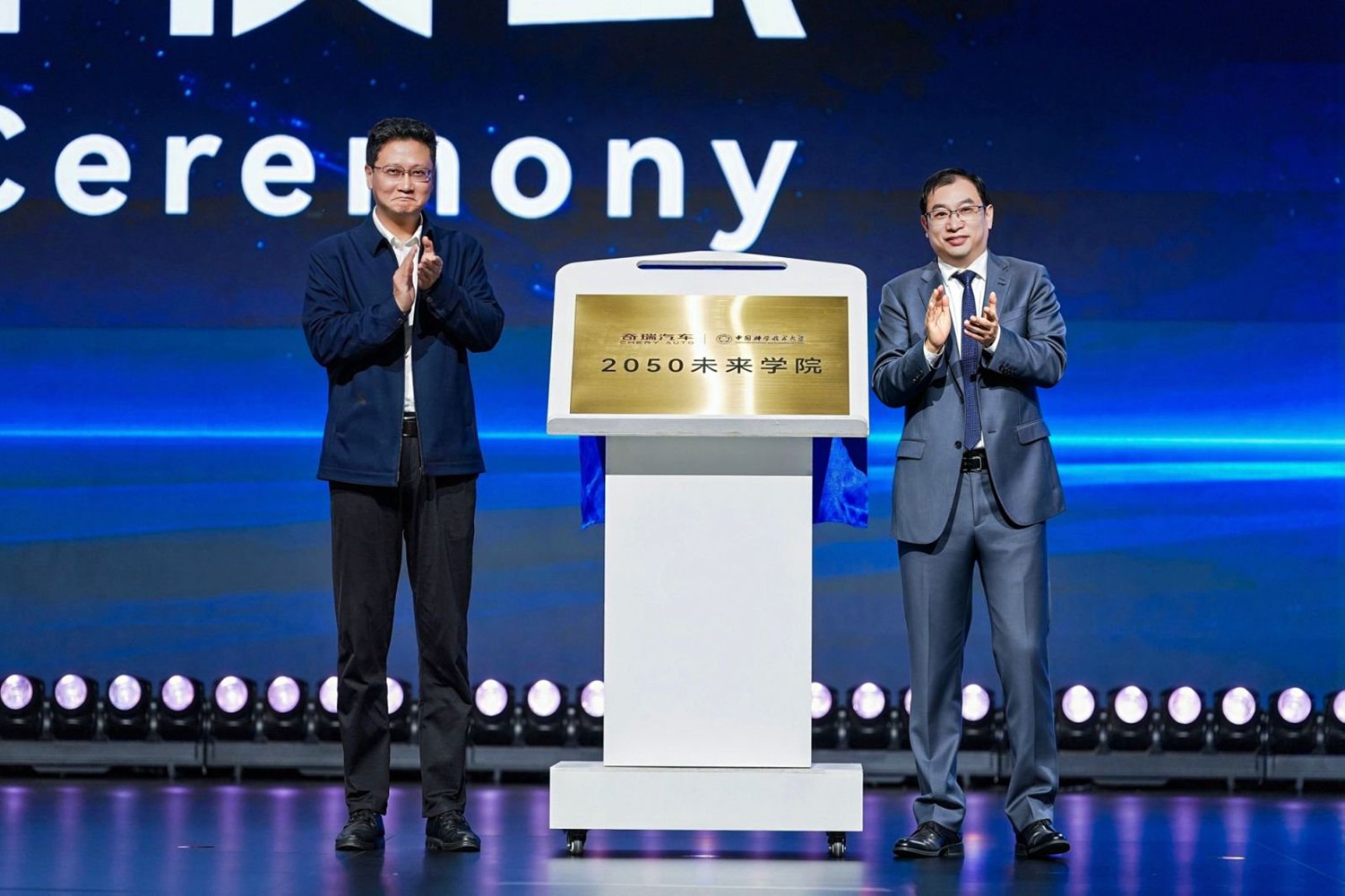
At the conference site, Chery and the University of Science and Technology of China jointly unveiled the "2050 Future Academy." Following the establishment of the "USTC-Kaiyang Automotive Advanced Technology Joint Laboratory" in March 2025, the two sides are deepening cooperation further. What this academy aims to do is serve as a "source" of frontier technology and an "incubator" of high-end talent, building a channel from 0 to 1 and then from 1 to 100. On the other side, the Global User Ecosystem Conference was held from October 18 to 24, and the green charity cycling event also set off from the international park on October 22, with a total distance of 10.6 kilometers.
From the Yaoguang 2035 strategy to Future City, Chery did not keep technology stuck in PPT this time. The four freedoms of mobility, energy, food, and life were broken down into walk-in scenarios and verifiable numbers. Technological evolution is not for showing off skills, but to let life return to life—this is probably the sentence this conference most wants to leave behind.


