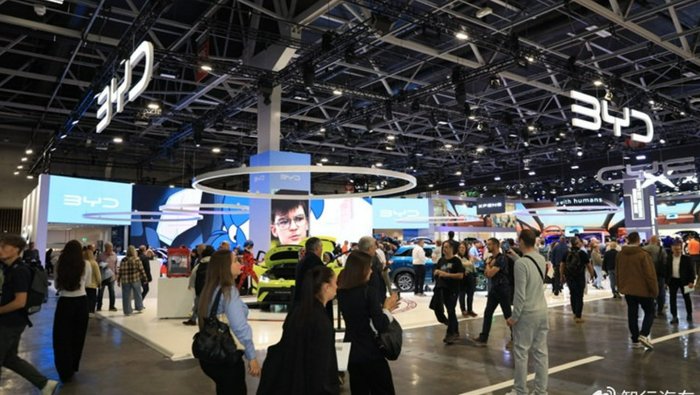
If I hadn't done my homework in advance, when I stepped into the Paris Porte de Versailles exhibition hall on October 12, chances are I would have been stunned — Chinese logos everywhere, Chinese-style car reviews filling my ears, and Chinese visitors crowding around domestic new energy vehicles, snapping photos nonstop.
I rubbed my eyes to make sure I hadn't walked through the wrong door. This is the 91st Paris International Motor Show, one of Europe's oldest and most orthodox auto shows, yet this scene was no exaggeration to call it a "Chinese auto show."
First, take a look at a set of figures and get a feel for it: a total of 16 Chinese automakers exhibited at this edition, with 25 brands under them taking the stage together. What does that mean? More than double the 9 in 2024, and more than France's 10 and Germany's 7 combined. Some media counted that 22 Chinese整车 / brands accounted for nearly 40 percent of all exhibitors. Looking across the entire venue, in prime locations in main halls such as Hall 6 and Hall 5.1, more than half were taken by Chinese names such as BYD, Chery, Geely, and Changan, each with a bigger stand than the last.
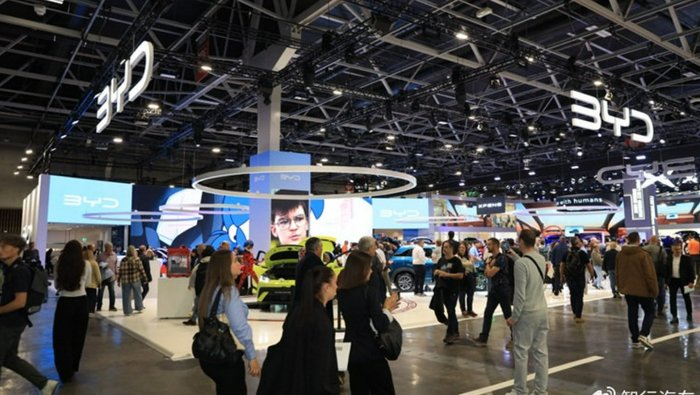
BYD really went all out this time, with its main brand joined by Denza and Fangchengbao in a three-pronged push, and total booth area reaching 1,600 square meters, roughly the scale of a domestic A-level auto show.
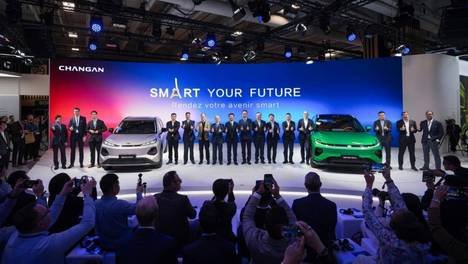
Changan's display was also substantial, with Qiyuan officially landing in Europe, and Deepal S05 and S07 also present, promoting the concept of "digital-intelligent new energy." GAC shouted "8 years of deep cultivation in Europe," with Hyper, Trumpchi, and Aion all present. In short: in the past we went abroad in groups to "look at cars"; now we go in groups to "be looked at."
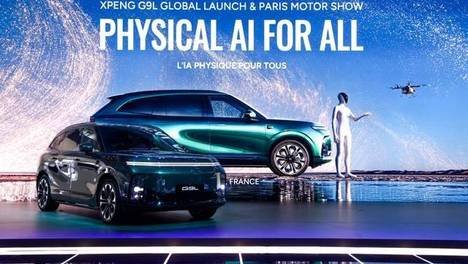
The new forces were even livelier. XPeng's G9L held its global launch directly in Paris, with a starting price in France of 74,990 euros, roughly 560,000 yuan, much more expensive than in China, but it still brought out every card it should: Turing AI chip, NGP intelligent driving, dual power, all arranged.
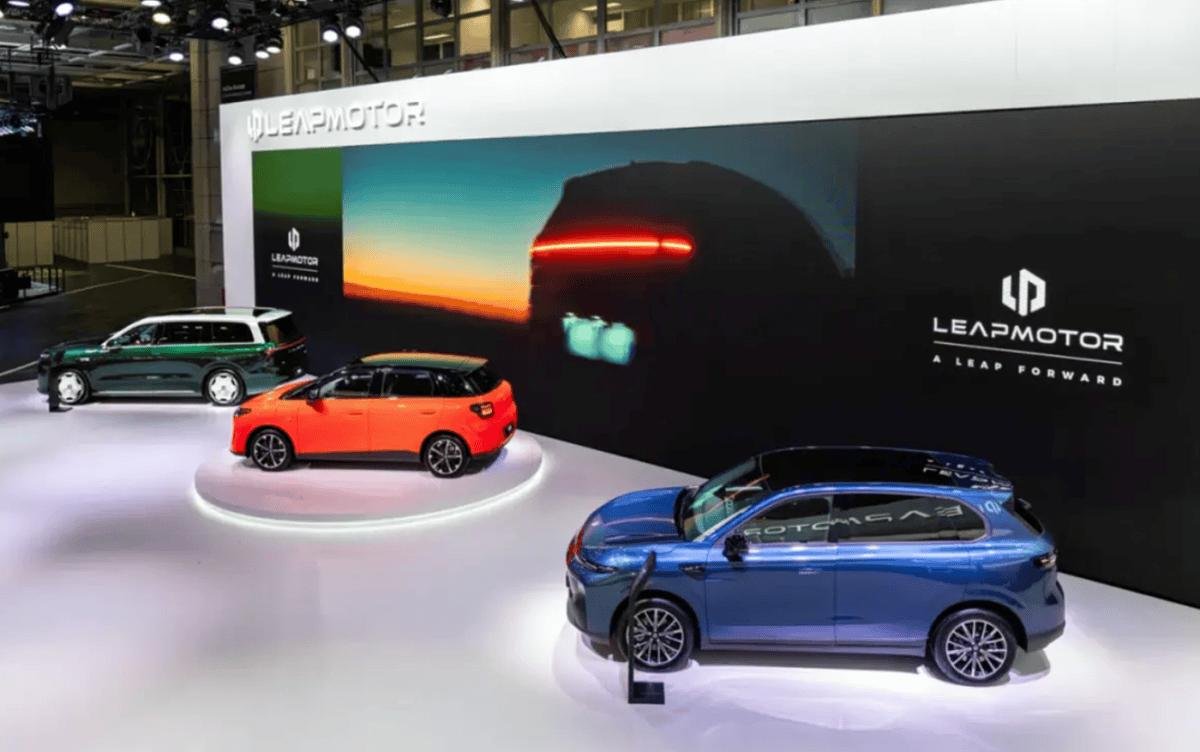
AITO was even more aggressive, bringing all four models, the AITO 6, 7, 8, and 9, clearly to build momentum for its official entry into Europe in 2027. Li Auto brought its first global pure electric model, the i6, while Leapmotor, leveraging its deep tie-up with Stellantis, rolled out the B03, A05, and D19 one after another.
But if we're talking about the biggest bombshell of this edition, I think it wasn't a car, but a "big move" by XPeng.
He Xiaopeng announced directly in Paris: XPeng is going to "sell technology" externally. This smart vehicle solution called "XPENG AI ENGINEERING" packages and opens up the entire vehicle platform, electronic and electrical architecture, intelligent driving system, AI BOX, chips, batteries, electric drive, all the way to full vehicle calibration and diagnostic toolchains. It's not just selling cars; robots, Robotaxi, flying cars, the Turing AI chip, and physical-world foundation models are all put on the table. What does that mean? It means upgrading from "vehicle exports" to "technology going global, system going global." Volkswagen had already become the first customer of XPeng's second-generation VLA intelligent driving, and the Turing AI chip also received a designation from Volkswagen. The signal is clear enough — Chinese automakers are starting to become "technology suppliers."
Add to that a broader backdrop: China and Europe reached a consensus on the electric vehicle trade issue in recent days, easing the risk of friction for now. For BYD, Chery, Geely, and others charging into Europe, this news is more uplifting than any new car.
On the other side, it's also quite interesting. Traditional giants like BMW and Nissan simply didn't come this time, and old aristocrats like Porsche were noticeably low-key. The former "hosts" have now become spectators; we, who once "studied and learned," are now seated at the main table. A 128-year-old European home ground, and it can change just like that.
To be honest, from the days when joint venture cars "taught us how to behave" to today when domestic cars go to European auto shows as the "main characters," Chinese automobiles have walked this road for decades. The "sinicization" of the Paris Motor Show this time is not due to a single brand's hit model, but because the entire industrial chain is pushing upward together — batteries, chips, intelligent driving, platforms, all self-developed and self-produced, then packaged for going global. This kind of confidence cannot be rolled out through a price war, nor can it be learned by imitation.
At the next Paris Motor Show, maybe it really will have to be renamed "Chinese Auto Show (European Sub-venue)."